 Skip to content
Area Rug and Oriental Rug Cleaning in Manhattan Beach, CA
AAA 1 Carpet Care cleans oriental and area rugs for households and businesses in Manhattan Beach, California. A rug in a beach house has a harder life than most people credit: sand comes in on feet and towels and works straight through the pile, the marine layer keeps the air damp for a good part of the year, and on hardwood the rug is usually the only soft surface in the room, so everything lands on it.
A RUG IS NOT A FITTED CARPET
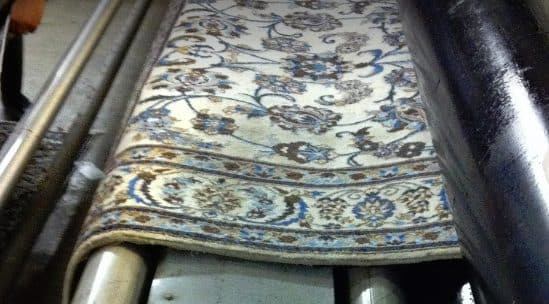
A fitted carpet is fastened down, so it can only ever be worked from the top. A rug is loose, and that changes everything about how it gets dirty and how it has to be cleaned. Soil drops through the pile and collects on the foundation and on the floor underneath, which is why a rug that looks clean can still release a cloud of grit when it is lifted. Cleaning a rug properly means getting at the back as well as the face.
How the rug is built matters just as much. A hand-knotted oriental has dyes that can migrate if it is over-wetted and a foundation that behaves differently from a machine-made backing. A latex-backed machine-made rug breaks down if it takes too much water. Treating all of them the same way is how rugs get ruined, and it is the reason we identify the rug before we decide on a method.
SAND, SALT AIR AND THE MARINE LAYER
Wool is the fibre most oriental rugs are built from, and wool pulls moisture out of the air and holds it. Within a few blocks of the water the air holds moisture for much of the year, so a wool rug in a Manhattan Beach house is rarely fully dry the way the same rug would be inland. That is what produces the faint damp smell people describe, and it is also why a rug cleaned without controlled drying will smell worse afterwards rather than better.
Sand is the other half of it. It arrives on feet, on towels and on dogs, and it falls straight through an open pile to the foundation where a household vacuum cannot reach it. Sand is angular, so every step grinds it against the fibre. A rug near an entrance from the walk streets or the Strand takes far more of this than one in a back bedroom, and the difference shows up as wear rather than as visible dirt.
HOW WE APPROACH A RUG
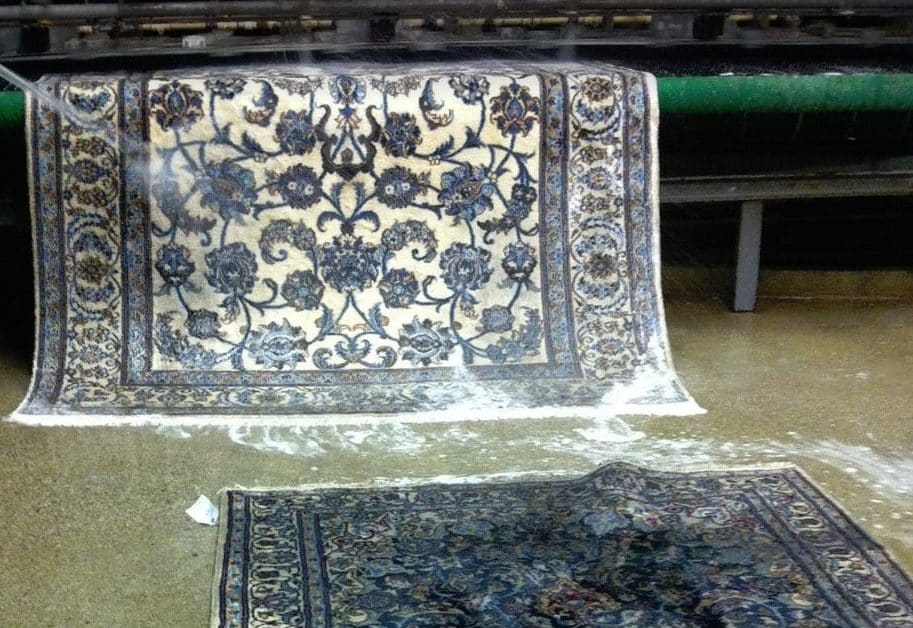
We identify the rug first: fibre, construction, hand-knotted or machine-made, and whether the dyes are stable. A hidden area is tested before anything wet is used, and the foundation and any old repairs are looked at, because a weak spot found afterwards is a weak spot somebody has to explain.
Dry soil comes out first and comes out thoroughly, since that is the step that protects the fibre. The cleaning method is then matched to what the rug will take, from a full wash down to a low-moisture clean for a silk or a latex-backed piece, and drying is controlled rather than left to the room. On the coast the drying stage is the part that decides whether the result holds.
RUG TYPES AND WHAT EACH ONE NEEDS
These are the rug types AAA 1 Carpet Care states it works with. The differences below are why a single method does not suit all of them, and why we ask what you have before quoting.
| Rug type | How it is built | What that means for cleaning |
|---|---|---|
| Hand-knotted oriental | Wool or silk pile knotted onto a cotton or wool foundation | Dye test first, moisture kept under control, fringe treated on its own |
| Antique or rare piece | Aged fibre, often with old repairs or reweaving | Inspected before anything else and cleaned only as hard as the fibre allows |
| Wool area rug | Absorbent natural fibre, usually machine woven | Takes cleaning well, but must be dried properly or the odour comes back |
| Silk or silk blend | Fine, lustrous, easily marked by water | The driest method the rug will accept, tested on a hidden area beforehand |
| Machine-made with latex backing | Synthetic pile bonded to a backing layer | Too much water breaks the backing down, so moisture is strictly limited |
| Flat-weave or kilim | No pile, so soil sits in and passes through the weave | Both faces need working, not only the side that gets walked on |
WHAT WE NEED TO KNOW FROM YOU
The useful things to tell us are the size, what the rug is made of if you know, whether it is hand-knotted or machine-made, and where it sits in the house. A rug just inside a door from the sand is a different job from one under a dining table, and knowing which it is changes how we plan the visit.
Also tell us what has happened to it. A pet accident, a spill, a leak from above, a previous cleaning that left a ring, or a spell rolled up in a garage all change the approach. A photograph of the back of the rug is worth more than a description of the front.
MANHATTAN BEACH RUG CLEANING FAQS
Can my oriental rug just be cleaned in place along with the carpet?
That is the thing we would advise against, and our own guidance says the same. A rug has a back and a foundation that need attention, and cleaning it face-down on the floor it is sitting on leaves the soil in the foundation and pushes moisture into the boards underneath.
My wool rug smells damp even in summer. Why?
Wool draws moisture from the air and keeps hold of it, and near the water the air stays humid for much of the year. Once soil in the foundation is damp for long enough it starts to smell, and no amount of surface cleaning reaches it. Controlled drying after a proper wash is what fixes it.
Is the fringe cleaned as well?
The fringe is handled separately because on a hand-knotted rug it is structural rather than decorative, and it takes a different treatment from the pile. It is also the part most often damaged by aggressive cleaning, so it is worth saying if yours is already fragile.
How do I tell whether my rug is hand-knotted or machine-made?
Turn it over. On a hand-knotted rug the pattern on the back is as clear as the pattern on the front and the knots are visible. A machine-made rug usually shows a backing layer instead, and the pattern on the reverse is blurred or hidden.
A rug came out of storage with moth damage. Is it worth cleaning?
It can be cleaned, but cleaning will not put back pile that has gone. What it does do is remove the material moth larvae feed on, so it stops the damage continuing, and it lets you see clearly what is left to decide about repair.
Do you clean rugs for short-term rentals and businesses?
Yes. Entrance runners, lobby rugs and the area rugs in furnished beach rentals take heavy, gritty traffic and usually need a schedule rather than a one-off. Tell us the turnover window and we will tell you whether the drying time fits it.
More from AAA 1 Carpet Care: our oriental and area rug cleaning page explains the service in full, and see also carpet cleaning in Manhattan Beach, furniture and upholstery cleaning, pet stain and odor removal and wood floor cleaning for the floor underneath.
Request Rug Cleaning in Manhattan Beach
Send us the size, the type, and a photograph of the back of the rug if you can. Use the form below and we will come back to you.