 Skip to content
Natural stone flooring—whether it is the classic elegance of marble in a foyer, the rustic charm of travertine in a kitchen, or the durable beauty of granite countertops—is a significant upgrade for any Los Angeles home. These materials are chosen not just for their aesthetics, but for their perceived durability. Stone is hard, rock-solid, and feels indestructible.
However, this perception of invincibility often leads homeowners to make expensive maintenance mistakes. While natural stone is incredibly durable against physical wear, it is surprisingly sensitive to chemical exposure. Treating your natural stone floors with the same generic cleaners you use on vinyl or ceramic tile is a fast track to dulling their shine and causing permanent structural damage. Understanding the unique geological properties of your stone is crucial to preserving its value.
Understanding the Chemistry of Your Floor
Not all stone is created equal, and treating them as a monolith is the first mistake many make. Natural stone generally falls into two categories regarding cleaning needs: calcareous stone (like marble, travertine, and limestone) and siliceous stone (like granite and slate).
Calcareous stones are composed mainly of calcium carbonate. Geologically, they are related to an antacid tablet. If you drop acid onto an antacid, it fizzes and dissolves. The same thing happens, on a microscopic level, to your marble floor when it comes into contact with acidic substances.
This sensitivity means that common household items like orange juice, wine, coffee, and even tomato sauce are potential hazards. If spilled and left to sit, they will chemically react with the surface of the stone. According to experts at The Spruce, failing to understand the specific type of stone you have is the leading cause of accidental damage, as what works for granite may severely harm marble.
The Etching Problem: Why Vinegar is the Enemy
The internet is full of “green cleaning” hacks, and vinegar is often touted as a miracle cleaner for everything. When it comes to natural stone, however, vinegar is public enemy number one.
Vinegar is an acid. When you clean a marble or travertine floor with a vinegar solution, you aren’t just cleaning the dirt; you are slowly dissolving the top layer of the stone. This process is called “etching.” Etching is often mistaken for a stain or a watermark, but it is actually physical damage to the stone’s surface. It usually appears as a dull, whitish spot where the polished finish has been chemically eaten away.
No amount of scrubbing will remove an etch mark, because there is nothing sitting on top of the stone to remove; the stone itself is gone. Preventing this requires using pH-neutral cleaners specifically formulated for stone. As noted in home maintenance guides by Bob Vila, using abrasive or acidic cleaners on stone surfaces is one of the most common and damaging cleaning mistakes homeowners make.
Beyond Cleaning: Honing, Polishing, and Sealing
Regular mopping with the correct neutral cleaner is essential for daily maintenance, but over time, foot traffic will inevitably wear down the factory finish of the stone. Scratches from sandy shoes and general wear will make the floor look flat and tired.
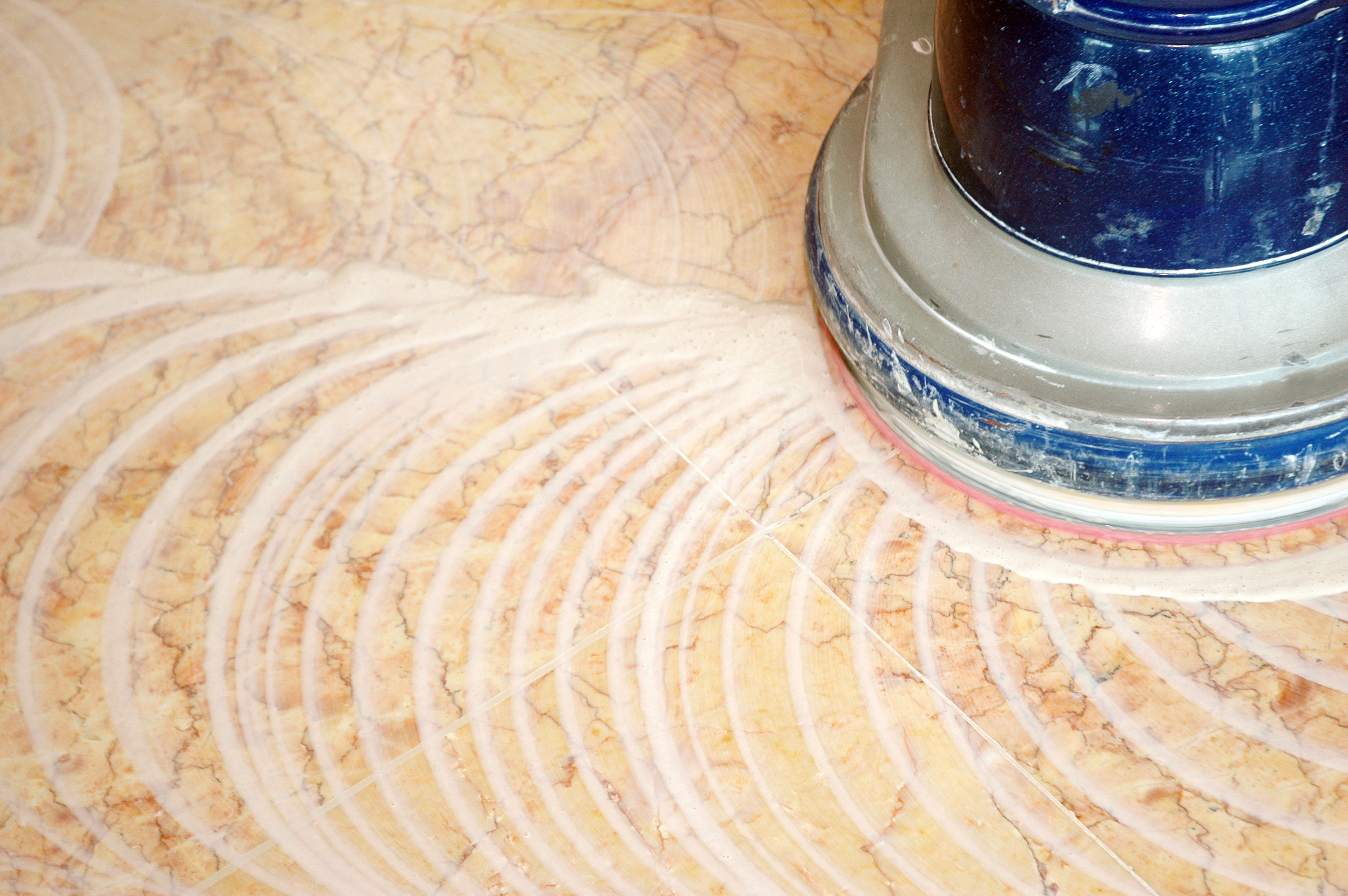
Professional natural stone restoration goes beyond simple cleaning. It involves a mechanical process using diamond-grit pads to resurface the stone. Depending on the desired look, this process can “hone” the stone to a matte finish or “polish” it to a high-gloss, reflective shine. This process literally removes the scratches and etch marks, revealing a fresh layer of stone underneath.
Crucially, after any professional cleaning or restoration, the stone must be sealed. Natural stone is porous. A high-quality impregnating sealer fills these pores below the surface, buying you time to wipe up spills before they become permanent stains. Better Homes & Gardens emphasizes that regular sealing is the single most important step in protecting natural stone from moisture and oil intrusion.
Your Los Angeles Experts for Natural Stone Cleaning
Your stone floors are a luxurious investment that requires specialized care. Don’t risk permanent damage with generic cleaning methods.
AAA1 Carpet & Upholstery Cleaning has the expertise to identify your stone type and use the correct restoration methods to bring back its natural beauty. Visit our Natural Stone Cleaning page to learn about our process, or Contact Us today for an assessment.
More from our blog: Natural Stone Cleaning and Care and Why Your Oriental Rugs Need Specialized Cleaning (And Not In-Home Carpet Cleaning).